Archaeological Techniques and
Research Center
FOR ALL ARCHAEOLOGY, BIOARCHAEOLOGY, OSTEOLOGY, FORENSICS, GEOPHYSICS AND EXPERIMENTAL PROJECTS, CHECK OUT OUR BRAND NEW WEBSITE:

Our Staff
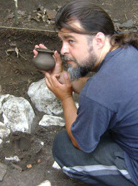
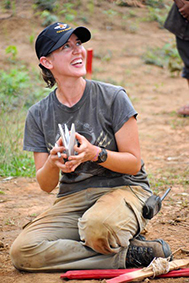
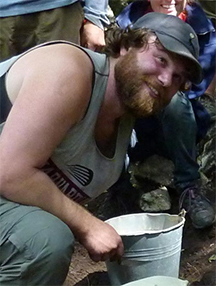
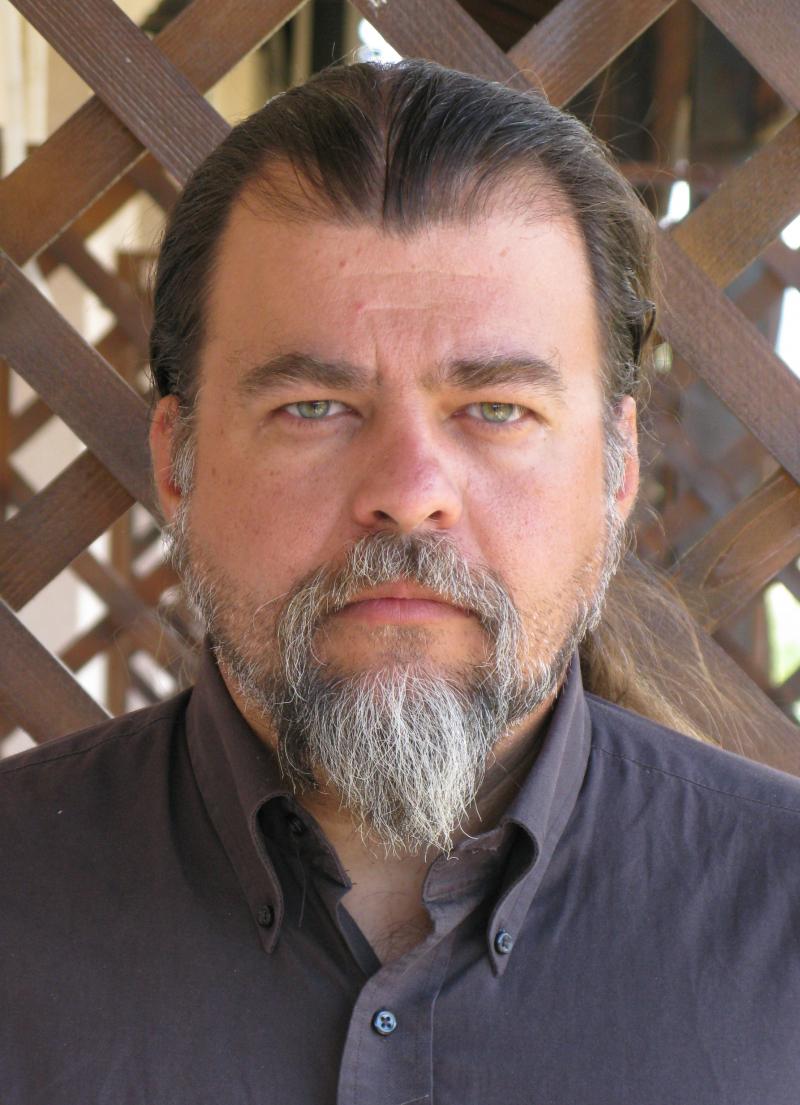
Andre Gonciar
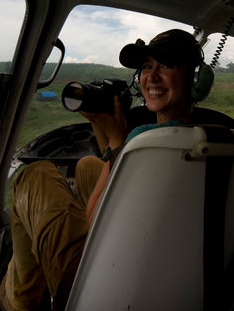
Allysha Winburn
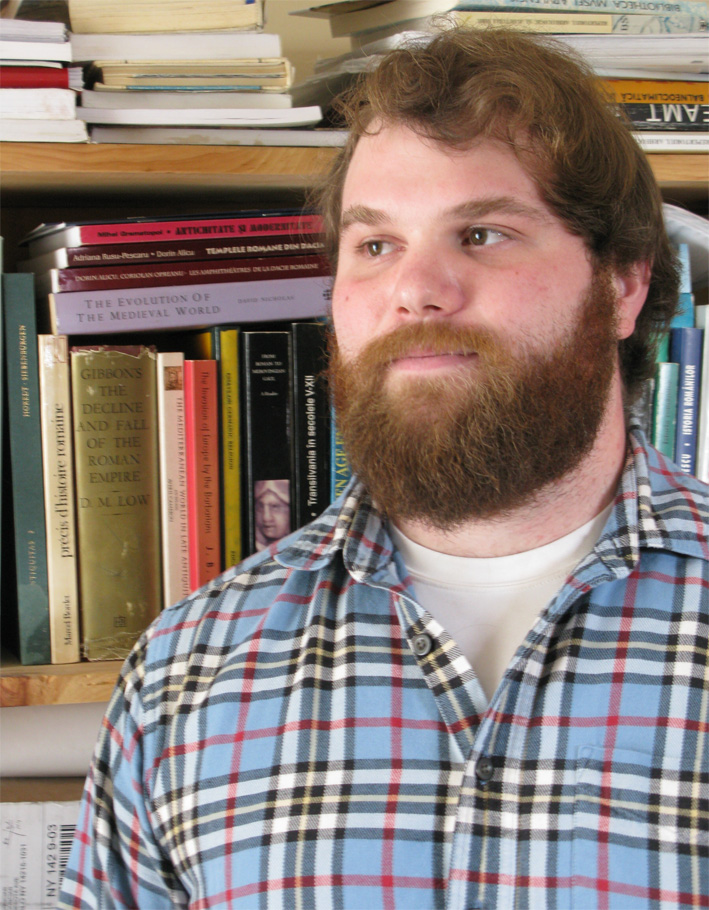
Alexander Brown
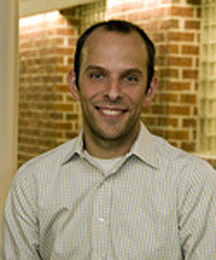
Jonathan Bethard
Alvaro Ibarra
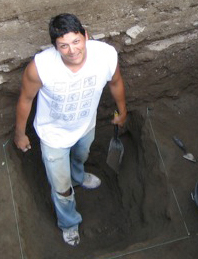
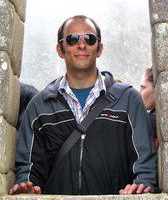
ANDRE GONCIAR is the founder and director of the Archaeological Techniques and Research Center (ArchaeoTek – Canada). In spite of the fact that he holds graduate degrees in History (University of Ottawa, Canada), Applied Geophysics (University of Montpellier III, France) and Anthropology-Archaeology (SUNY Buffalo, USA), he is first and foremost a field archaeologist. After having investigated in one capacity or another almost all historically inhabited environments, he settled on the intensive and historically in-depth exploration of the Carpathian Region, and more specifically, Transylvania (Romania). Since 2000, he has personally directed and coordinated over 20 archaeological field schools and research workshops in that area. He works on Prehistoric social and political evolution patterns, more specifically during the Bronze and Iron Age. Theoretically, he is interested in the mechanisms and dynamics of transition, liminal spaces and times, questions of negotiated and performed identity, constructions of normative and deviant behavior. He is the field director of ArchaeoTek’s Iron Age Excavation and Experimental Workshop and co-directing the Roman and Funerary Excavations.
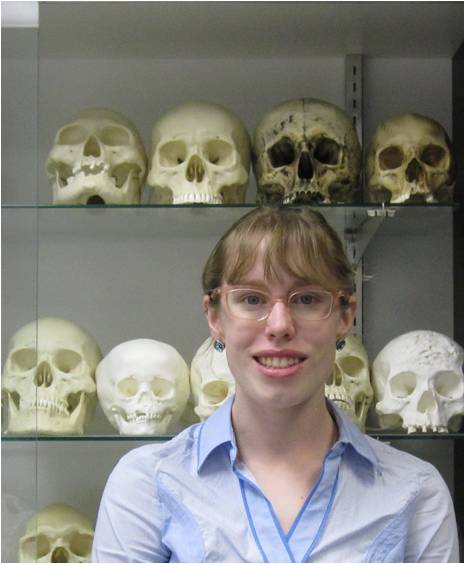
JONATHAN D. BETHARD is a well published forensic and biological anthropologist, currently Assistant Professor in the Department of Anatomy and Neurobiology at Boston University as well as affiliated with the Department of Archaeology at BU. He has received his graduate training at the University of Tennessee, including working as a field instructor at the Human Remains Recovery School. His scholarly pursuits so far have included refining methods used for constructing biological profile in forensic contexts, Andean bioarchaeology, stable isotope analysis and geometric morphometrics. On the international scene, Jonathan has worked as an instructor for numerous courses in forensic anthropology with the International Criminal Investigative Training Assistance Program (ICITAP) in Colombia and Algeria and will be taking over ArchaeoTek’s Osteology and Bioarchaeology laboratory programs. In 2014, he will also teach the advanced Bioarchaeology of Infants Workshop.
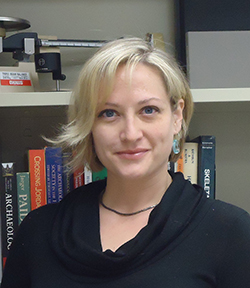
ALLYSHA P. WINBURN is a published forensic anthropologist, and a specialist in the recovery and analysis of human remains. She is a graduate analyst at the C.A. Pound Human Identification Laboratory, where she has authored numerous forensic anthropology reports and led multiple field recoveries. Allysha is an experienced instructor, having taught both laboratory and field recovery courses to diverse groups of undergraduates, graduate students, and law enforcement personnel. Allysha worked for over five years at the Joint POW/MIA Accounting Command Central Identification Laboratory (JPAC-CIL), leading teams of military and civilian personnel on worldwide recovery missions to search for, excavate, and repatriate the remains of fallen U.S. service members. She served as the Interim Project Manager for the "K-208 Project" a massively commingled assemblage of human skeletal remains dating to the Korean War. She also worked with the New York City Office of Chief Medical Examiner in the renewed (ca. 2007) archaeological search for human remains from the World Trade Center site. Her main research interest is in estimating age-at-death from human skeletal remains, though her publications also include work on zooarchaeology, and forensic identification via radiographic comparisons. Her current research investigates the effects of age, activity, and body mass on the degeneration of the human acetabulum. She is taking over as field director ArchaeoTek's 2014 Funerary Excavations - Lost Churches Project.
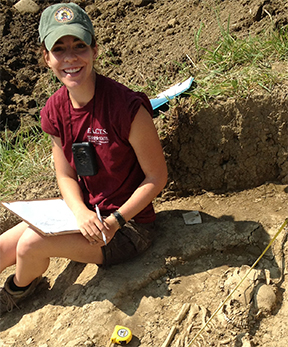
ALEXANDER E. BROWN is a Harvard graduate and an experienced field archaeologist. After six years of excavating a series of Iron Age and Roman sites in Transylvania, he is taking over as principal field director of ArchaeoTek's Roman Excavations. A Classical archaeologist by trade, he has expanded his theoretical interests to applied anthropological questions, such as the perception of the other during conflict situations, landscape strategies in asymmetrical power contexts and processes of colonization-creolization in Roman Dacia, prior to 270 A.D. As such, he is co-directing the "life by the Imperial Roads Projects", which includes the Rapoltu Mare civilian road side settlements excavation and survey and the excavation of the civilian habitat in Sarmizegetusa Regia, the Roman Capital of the Dacian Provinces and First City North of the Danube, excavation. In 2012, he has received ArchaeoTek's Advanced Research Field Fellowship, which provides 4 years of funding for intensive field research and a field teaching position.
ALVARO IBARRA received his Ph.D. in art history from the University of Texas at Austin in 2009 and is currently an assistant professor in the department of art history at the College of Charleston. He has twelve years experience as a field archaeologist at Greek, Roman, Etruscan, and Dacian sites throughout Europe, from Pompeii to Racos. His research revolves around the effects of foreign military interventions on native cultural expression in the Roman provinces. He is the director of the Brasov Archaeological Project, a systematic examination of the second and third-century marching camps along the Upper Olt River Valley. He is the author of several forthcoming articles on the re-examination of Roman provincial monuments located in present-day France, Scotland, and Romania. Dr. Ibarra is joning ArchaeoTek's Roman archaeology team, expanding the exploration of the Sarmizegetusa Ulpia Traiana region.
Katie Woods is a Ph.D. student at the University of Nevada, Las Vegas. She completed her M.S. at Boston University in Forensic Anthropology where she had the opportunity to intern at the Office of the Chief Medical Examiner for the Commonwealth of Massachusetts. Additionally, she completed an internship at the Knoxville Regional Forensic Center in Tennessee and has presented at the American Academy of Forensic Sciences. Her interests are in inequality, structural violence, and paleopathology and their presence in the bioarchaeological record. She has completed research related to biomechanics and the use of muscle attachment sites for understanding activity reconstruction. She is continuing to present and publish on this material as well as mentor students at UNLV, where she was awarded a very prestigious graduate assistantship in the Teaching Excellence Program. In 2014 she will be working as a Project Assistant for the Osteology and Bioarchaeology lab program and Bioarchaeology of Children Workshop
Dorothy “Annie” Riegert is a physical anthropology student at the University of Texas at Austin. She participated, as a student, to both ArchaeoTek’s Osteology Workshop and Medieval Funerary Excavation where she has shown exceptional promise, which has materialized in a podium presentation at the International Student Colloquium on Osteology and Bioarchaeology in Odorheiu Secuiesc in 2013 and a poster presentation at the 2014 SAA Meeting. The excellence of her results both in the field and in academic settings has earned her ArchaeoTek’s 2014 Field Undergraduate Fellowship and a position of Junior Field Assistant for our Medieval Funerary Excavation.
Anna Osterholtz is a Ph.D. (A.B.D) candidate at the University of Nevada, Las Vegas. She has excavated and/or analyzed human skeletal remains from all over the world including the American Midwest, American Southwest, Mexico, Belize, the UAE, Cyprus, and Guam. Her ongoing research focus is on the bioarchaeology of human experience, including the effect of trade on health status of different populations, mortuary patterning in commingled and fragmentary assemblages, and the social role that violence plays within societies, with publications focusing on burial processes in the Bronze Age UAE and the role of hobbling and torture in a massacre assemblage in the American Southwest. In 2011, she was awarded the J. Hayden prize for her article entitled “Hobbling and Torture as Performative Violence: An Example from the Prehistoric Southwest.” Her first edited volume, titled "Commingled and Disarticulated Human Remains: Working Towards Improved Theory, Method, and Data" with Springer, just came out. She was the 2013 project assistant for both Osteology and Bioarchaeology Workshops. In 2015, she will be codirecting the Osteology Workshop and teaching the advanced Commingled Remains Workshop.
PAST STAFF:
KIRSTY E. SQUIRES is a published Sheffield University Ph.D., dedicated researcher and field archaeologist. Her main research interests include biological and forensic anthropology, childhood and gender studies, especially as it relates to Anglo-Saxon and early medieval archaeology and funerary contexts. Although an expert in the analysis of cremated remains, she has worked extensively with both buried and cremated human skeletal remains from the prehistoric and historic past throughout the UK. As a highly experienced field bioarchaeologist, she directed ArchaeoTek's 2013 Funerary Excavations.